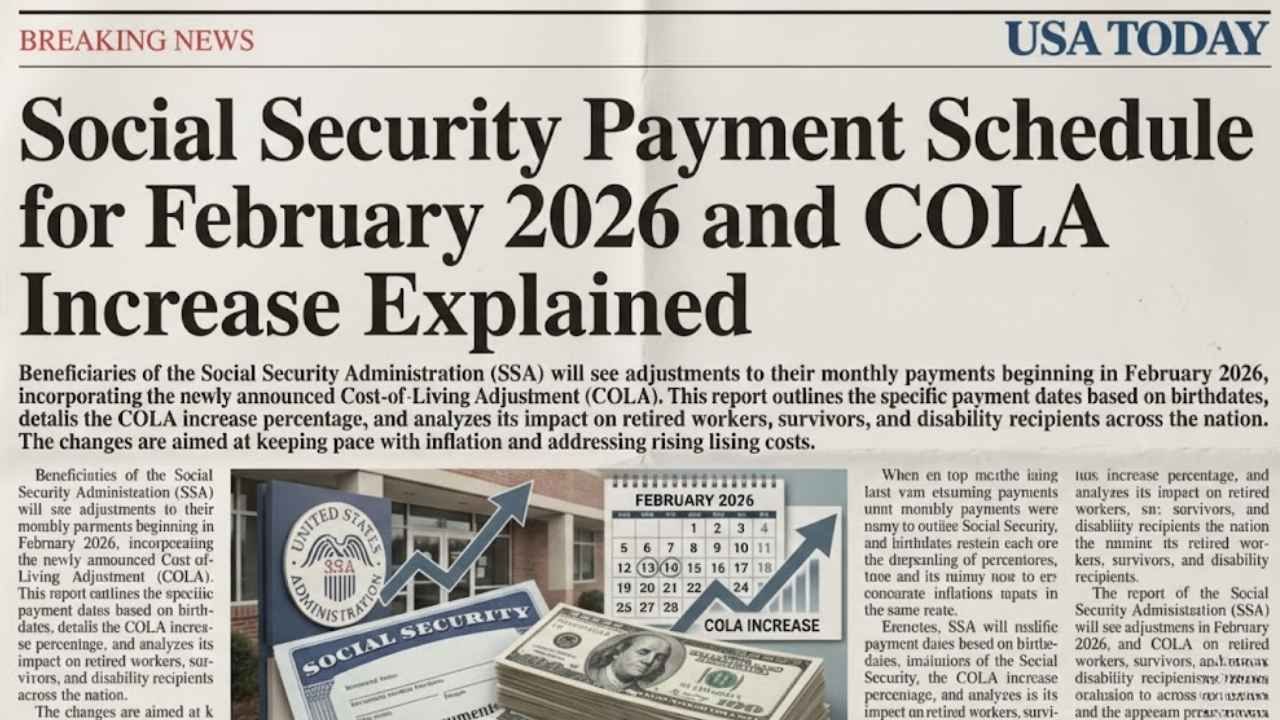
February 2026 is an important month for millions of Social Security beneficiaries because it represents the first full payment cycle reflecting the new Cost-of-Living Adjustment (COLA) for the year. For retirees, people with disabilities, and surviving family members, this adjustment plays a critical role in protecting purchasing power as everyday expenses continue to evolve. With a predictable payment calendar and no holiday-related delays, February offers clarity and financial stability for households that rely on Social Security income.
Why February 2026 Matters for Social Security Recipients
February is the first full month in which all Social Security payments include the 2026 COLA increase. While January payments may reflect partial timing differences depending on benefit type, February establishes the new baseline for the year. This allows beneficiaries to better plan monthly budgets around updated benefit amounts.

For many households, Social Security is not supplemental income but a primary financial foundation. Even modest adjustments can influence decisions related to housing, healthcare, utilities, and food. February’s consistency helps beneficiaries assess how far their updated payments will stretch throughout the year.
February 2026 Social Security Payment Dates
The Social Security Administration uses a structured schedule to distribute benefits, reducing system strain and ensuring smooth processing. Payments are determined primarily by the beneficiary’s date of birth or the year benefits began.
SSI recipients and individuals who began receiving Social Security before May 1997 will receive their payments on February 3, 2026. Beneficiaries born between the 1st and 10th will be paid on February 11, those born between the 11th and 20th on February 18, and those born between the 21st and 31st on February 25.

This staggered system allows for predictable deposits and minimizes delays, particularly during months with high transaction volume.
A Rare Month With No Schedule Disruptions
One of February 2026’s key advantages is the absence of federal holidays that could interfere with payment timing. Unlike other months where deposits may shift earlier due to holidays, February payments are expected to arrive exactly on schedule.
For beneficiaries who carefully align bill payments with deposit dates, this predictability reduces stress and helps avoid overdraft fees or late charges. The reliability of February’s calendar makes it one of the most stable months in the annual payment cycle.
Understanding the 2026 COLA Increase

The Cost-of-Living Adjustment for 2026 is estimated at approximately 2.8 percent. While lower than the historically high increases seen during periods of elevated inflation, it still represents meaningful support. COLA is designed to preserve purchasing power rather than enhance lifestyle, ensuring benefits keep pace with rising costs.
The adjustment is calculated using the Consumer Price Index for Urban Wage Earners and Clerical Workers. This index tracks changes in the prices of essential goods and services, including food, housing, transportation, and healthcare.
What a 2.8 Percent Increase Means in Practice
For many beneficiaries, the COLA increase will be absorbed by necessities rather than discretionary spending. Winter heating costs, prescription medications, insurance premiums, and grocery bills often consume most of the adjustment.
While a 2.8 percent increase may not feel transformative, it helps prevent gradual erosion of income over time. Without COLA adjustments, beneficiaries would face increasing financial pressure as prices rise year after year.
How February Payments Support Financial Planning
With updated benefit amounts and dependable deposit dates, February offers an opportunity for beneficiaries to reassess monthly budgets. Many households use this time to review expenses, adjust savings goals, or plan for medical costs expected later in the year.
Those receiving benefits through direct deposit will typically see funds available on the morning of their scheduled payment date. This consistency supports better cash flow management and reduces uncertainty.
Comparison With Recent COLA Trends
In recent years, COLA increases exceeded five percent due to sharp inflationary pressures. The lower 2026 adjustment reflects a cooling economic environment, though many households still feel the effects of elevated costs from prior years.
This shift suggests stabilization rather than a return to pre-inflation affordability. Beneficiaries may notice that while prices are rising more slowly, they remain higher than in earlier periods, reinforcing the importance of every incremental adjustment.
Why Payment Delays Are Unlikely
February 2026 presents minimal risk for delayed Social Security payments. There are no processing disruptions tied to holidays, and the SSA’s automated systems are designed to handle routine monthly distributions efficiently.
Delays typically occur only when payment dates coincide with federal holidays or weekends, neither of which affect February’s schedule. Beneficiaries can expect on-time deposits unless individual banking issues arise.
Steps Beneficiaries Should Take
To make the most of February payments, beneficiaries are encouraged to review their Social Security statements to confirm updated amounts and deposit dates. Ensuring that direct deposit information remains accurate helps avoid administrative delays.
Some recipients choose to allocate the COLA increase toward essential expenses, while others use it to reduce outstanding debt or build emergency savings. Even small adjustments can strengthen long-term financial resilience.
Final Verdict
February 2026 delivers stability and clarity for Social Security recipients. With the 2026 COLA fully applied and a payment calendar free of disruptions, beneficiaries can rely on timely deposits and predictable income. While the 2.8 percent increase may not dramatically change financial circumstances, it plays a vital role in maintaining balance and supporting essential needs in a steadily evolving economic landscape.
Disclaimer
This article is for informational purposes only. Social Security payment schedules, benefit amounts, and COLA adjustments are subject to change based on federal law and official decisions. Beneficiaries should consult the Social Security Administration or qualified professionals for guidance specific to their individual situations.