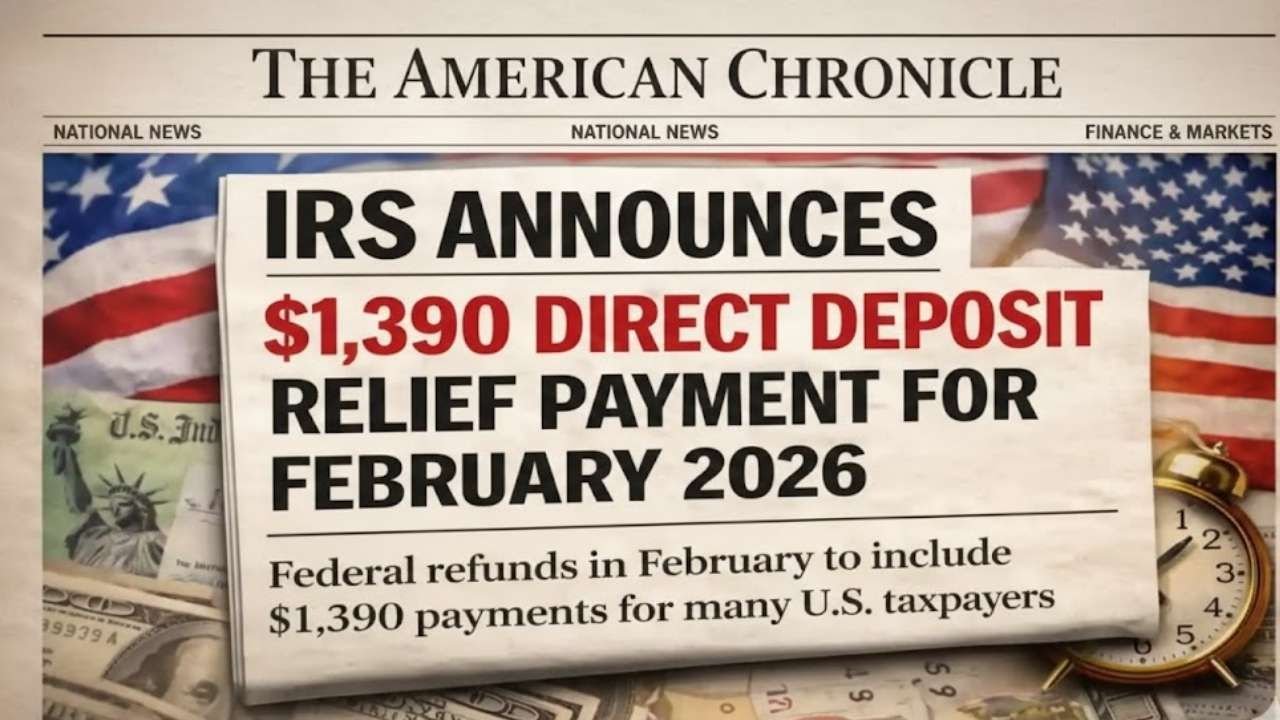
The phrase IRS $1,390 Direct Deposit Relief February 2026 has gained rapid attention as taxpayers search for financial updates during peak tax season. Claims of a surprise $1,390 payment arriving in February have circulated widely, raising hopes among households managing higher living costs. To make informed decisions, it is important to understand what is verified, what remains speculative, and how IRS relief programs actually work.
Where the $1,390 Amount Originated
The $1,390 figure did not come from a formal IRS or U.S. Treasury announcement. Instead, it emerged from informal policy discussions about using surplus federal collections, tariff revenue, or budget reallocations to provide taxpayer relief. These conversations were exploratory and not tied to enacted legislation. Once shared online, the number quickly took on a life of its own, being labeled as “approved” despite the absence of any official authorization.
Why February 2026 Feels Convincing to Many

February is traditionally one of the busiest months for IRS payments. Millions of tax refunds are issued during this period, often through direct deposit. The overlap between refund activity and unverified payment claims makes additional deposits seem realistic. Memories of earlier stimulus programs further reinforce the belief that new relief could appear without warning, even though current circumstances differ significantly.
Current Official Status as of February 2026
As of early February 2026, no federal agency has confirmed a $1,390 direct deposit program. The IRS has not released guidance, schedules, or eligibility rules for such a payment. Without congressional approval and a signed law, the IRS and Treasury lack authority to distribute funds. Any genuine relief initiative would be accompanied by public announcements, official documentation, and clear timelines.
How IRS Relief Payments Are Normally Approved
Legitimate IRS relief payments follow a defined process. Congress passes legislation specifying payment amounts, income thresholds, and funding sources. The Treasury Department and IRS then issue official notices explaining who qualifies and how payments will be delivered. Direct deposit is usually prioritized, followed by paper checks or prepaid debit cards. The absence of these steps strongly indicates that the $1,390 payment remains speculative.
Potential Eligibility If a Program Were Created
If a $1,390 relief payment were ever approved, eligibility would likely center on low- and middle-income households. Past programs used adjusted gross income thresholds and phased reductions for higher earners. Families with dependents and individuals receiving Social Security benefits are often included in policy discussions. However, no eligibility framework currently exists, and assumptions based on previous stimulus checks may not apply.
Possible Tax Treatment and Benefit Impact
Most draft relief proposals describe one-time payments as non-taxable income. Historically, similar payments did not reduce benefits such as Social Security, SSI, or SSDI. That said, without enacted legislation, there is no official confirmation on tax treatment or benefit interactions. Relying on unverified assumptions could lead to budgeting mistakes.
Economic Context Behind the Discussion
Ongoing cost pressures, housing expenses, and everyday inflation continue to affect household budgets. In this environment, the idea of a $1,390 payment resonates strongly. Economists note that a one-time deposit could provide short-term help for essentials like groceries, utilities, or rent. However, they also emphasize that temporary payments do not resolve long-term affordability challenges.
Social Media and the Spread of Misinformation

Social platforms play a major role in amplifying financial rumors. Headlines and short videos often present speculation as confirmed fact, omitting critical context about legislative approval. This increases the risk of scams, particularly posts requesting personal or banking information. Financial experts consistently advise relying only on official IRS and Treasury communications.
What Would Need to Happen Next
For a $1,390 direct deposit to become real, Congress would need to pass a bill authorizing the payment. The executive branch would then approve it, followed by detailed guidance from federal agencies. Only after these steps would payment schedules and eligibility criteria be announced. Until then, the proposal remains hypothetical.
How Taxpayers Should Prepare Now
Rather than budgeting around unconfirmed payments, taxpayers should focus on verified income sources. Filing tax returns accurately, ensuring direct deposit information is up to date, and monitoring official IRS updates are practical steps. These actions help secure timely refunds and reduce exposure to misinformation.
Final Verdict
The IRS $1,390 direct deposit relief for February 2026 has not been approved or authorized. While the discussion reflects real financial strain faced by many households, no official program exists at this time. Taxpayers should approach such claims cautiously and rely on confirmed government announcements when making financial plans.
Disclaimer
This article is for informational purposes only. The $1,390 IRS direct deposit discussed here has not been confirmed or authorized as of February 2026. Payment amounts, eligibility rules, and timelines depend on federal legislation and official announcements. Readers should rely on IRS and U.S. Treasury communications for accurate updates.