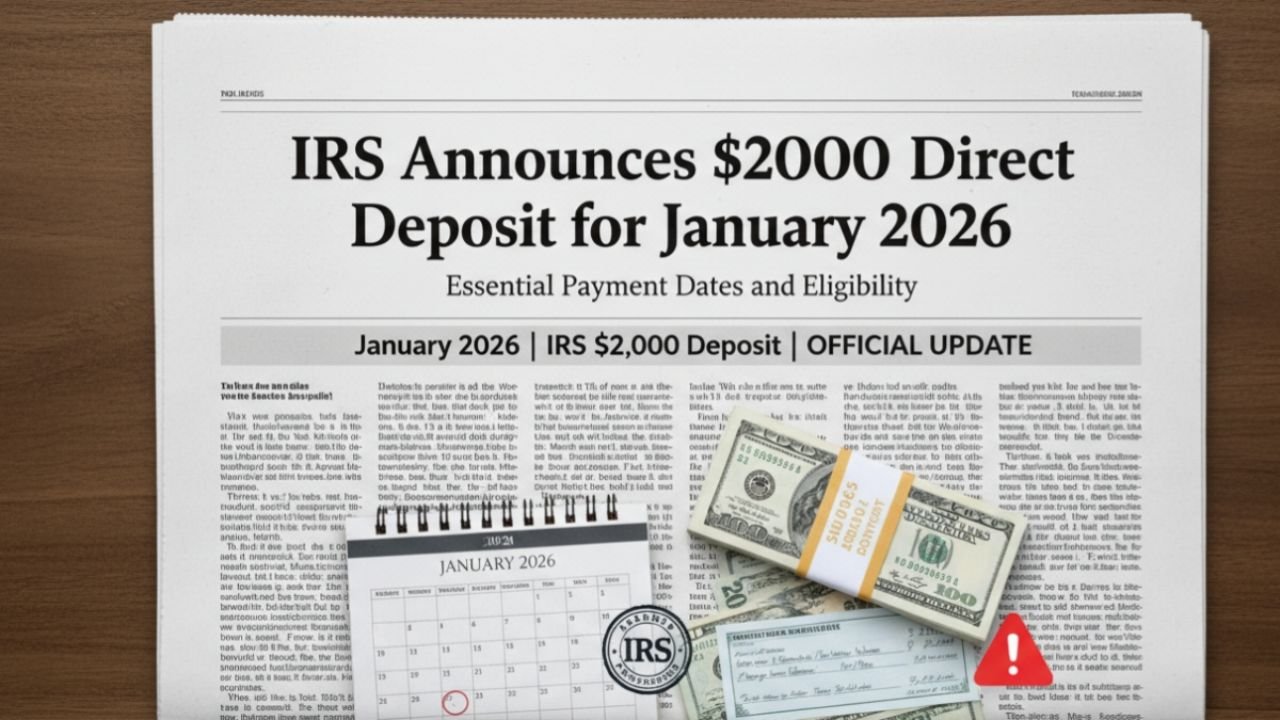
As 2026 begins, claims of an IRS-issued $2,000 direct deposit for January have resurfaced across social media and messaging platforms. Polished posts, detailed timelines, and apparent eligibility charts make the story feel official, catching the attention of households still managing inflation, rising living costs, and debt. For many, even the suggestion of a $2,000 infusion strikes a chord amid ongoing financial pressures.
Separating Rumor from Reality
Despite widespread discussion, the IRS has not authorized a universal $2,000 direct deposit for January 2026. No legislation, official guidance, or press release confirms such a payment. What drives the narrative are routine IRS processes, including tax refunds, refundable credits, and targeted assistance linked to specific circumstances.

January naturally sees increased financial activity. Taxpayers submit returns, the IRS processes refunds, and early deposits sometimes cluster around similar figures. Screenshots shared online without context can easily transform normal refunds into the illusion of a coordinated federal payment.
How the $2,000 Claim Gained Traction
The claim echoes the language of pandemic-era stimulus announcements, complete with income thresholds, “payment waves,” and references to direct deposits or checks. These details create a sense of precision and insider knowledge, even though they have no official source.
Mark Ellison, a U.S.-based tax consultant, explains, “Refunds around $2,000 are common because they reflect moderate withholding plus refundable credits. Repetition online makes it feel like a program, but it’s simply a recurring result of individual tax circumstances.”
The Role of Refundable Credits

Refundable tax credits, including the Child Tax Credit and education-related benefits, can boost refunds beyond actual taxes paid. Low- and middle-income families often benefit most from these credits, which explains why early deposits can appear substantial and spur speculation about a universal $2,000 payment.
Why Misinformation Persists
Viral claims of a guaranteed $2,000 deposit do more than mislead—they open the door to fraud. Scammers exploit these stories with fake portals asking for Social Security numbers or banking information. The promise of money lowers caution, increasing the likelihood of compliance with malicious requests.
Additionally, families may delay budgeting, bill payments, or tax filings while waiting for unverified funds. Over time, repeated cycles of hope and disappointment erode trust in official communication, making it harder for legitimate IRS announcements to reach the public effectively.
Misleading Charts and Dates

Income limits, residency requirements, and payment windows featured in online claims add to the illusion of authenticity. In reality, these charts are easy to fabricate and lack any legal or regulatory basis. Neha Rao, a fictional tax policy observer, notes, “If a claim lists benefits without referencing official rules or notice numbers, that’s a warning sign. The IRS does not operate on vague promises.”
What Taxpayers Should Focus On
January 2026 is an active month for legitimate financial processes. Preparing returns, gathering documentation, and understanding applicable credits determine real refunds. These refunds are calculated per household and depend on income, filing status, and tax credits claimed—not a blanket $2,000 payment.
Relying on primary sources remains critical. IRS.gov, official press releases, and licensed tax professionals provide the most accurate guidance. Any genuine relief programme would be communicated through these channels first, not through viral posts or forwarded messages.
Conclusion
The notion of a universal $2,000 IRS deposit for January 2026 is a misconception fueled by normal refund cycles, early direct deposits, and viral online content. While the number appears frequently, it reflects individual tax circumstances and refundable credits rather than a government-mandated payout. Households should remain cautious, verify all claims through official sources, and avoid making financial decisions based on unverified information.
Disclaimer: This article is for informational purposes only and does not constitute tax, legal, or financial advice. As of January 2026, no universal IRS $2,000 direct deposit or stimulus payment has been approved. Refund amounts, eligibility, and timing depend entirely on individual circumstances. Readers should consult the official IRS website or a licensed tax professional for guidance specific to their situation.